Cleaner Seas Group and Simply Sustainable have been confirmed as headline sponsors of the GB Row Challenge, a rowing race around Great Britain, which collects vital scientific data on the health of UK coastal waters.
The announcement brings together two organisations focused on advancing practical solutions to environmental challenges, alongside one of the world’s most demanding ocean rowing events.
GB Row Challenge sees teams of rowers circumnavigate the entire coast of Great Britain, unsupported, over 2,000 miles while navigating complex tidal streams, shipping lanes and volatile weather.
Every participating boat is fitted with scientific equipment that collects environmental data, contributing to national research on ocean health.
Rowers gather data on microplastic pollution, biodiversity, underwater noise pollution, sea temperature and salinity. The data is analysed by University of Portsmouth scientists before being hosted on The Crown Estate’s Marine Data Exchange, one of the world’s largest collections of marine industry data.
GB Row Challenge founder, William de Laszlo, said: “We’re very excited to collaborate with two organisations who are so aligned with GB Row Challenge’s mission to understand the impacts of human activity on marine ecosystems and inform strategies for conservation and sustainability.”
Through this partnership, Cleaner Seas Group and Simply Sustainable will support the event’s ongoing commitment to reducing environmental impact while promoting awareness of marine conservation, sustainable operations, and responsible adventure sport practices.
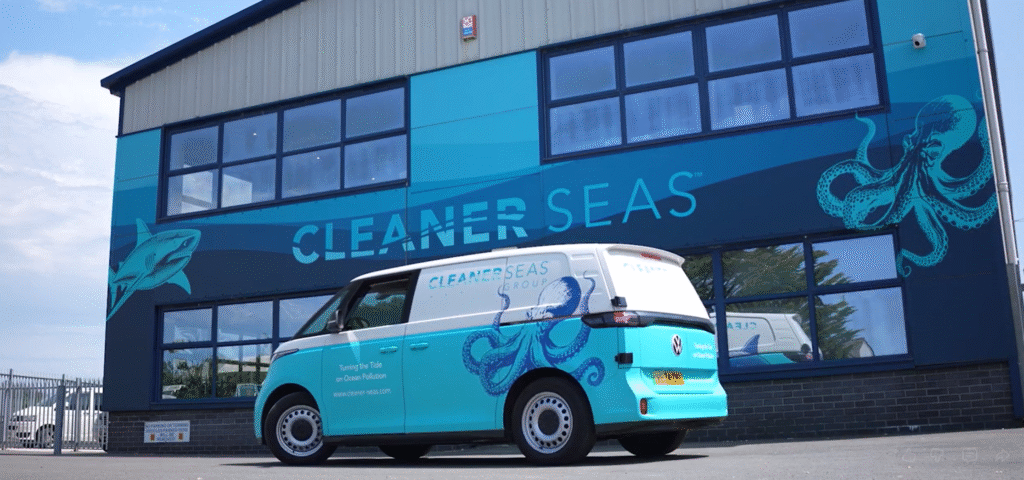
Cleaner Seas Group HQ is based in Cornwall
Cleaner Seas Group develops microplastic filtration solutions for domestic and commercial markets globally, helping tackle microplastic and microfibre pollution at source. Their technology intercepts harmful fibres directly from washing machines, preventing them from entering waterways and marine ecosystems.
Dave Miller, CEO, Cleaner Seas Group, said: “GB Row Challenge represents everything we believe in at Cleaner Seas Group – a deep connection to the ocean, resilience in the face of a climate crisis that has never felt more complex, and the determination to leave the planet better than we found it in.
“These teams are pushing themselves far beyond the challenge of rowing alone. They’re collecting vital samples from some of the UK’s most fragile coastlines to help deepen our understanding of microplastic pollution. The more we understand the scale of the problem, the louder we can be in driving awareness, accelerating research and pushing for the legislative change needed to save our seas.”
Simply Sustainable is a leading consultancy firm, which has been operating for over 16 years. Its mission is to help clients achieve their Environmental, Social and Governance (ESG), net zero and sustainability goals.
Alastair Macgregor, CEO, Simply Sustainable, said: “We are incredibly proud to be supporting the GB Row Challenge once again this year. What makes this partnership so special is the powerful combination of human endeavour and environmental purpose. The challenge not only pushes participants to achieve extraordinary feats of endurance, but also generates valuable scientific data that helps us better understand and protect our marine ecosystems. At Simply Sustainable, we believe meaningful change starts with action, and GB Row Challenge is a brilliant example of how sport, science and sustainability can come together to create lasting impact.”
Two teams are busy preparing to take on the GB Row Challenge in 2026, which starts at Tower Bridge, London, at 2pm on Sunday 14 June.
Share This Story, Choose Your Platform!
Recent Posts
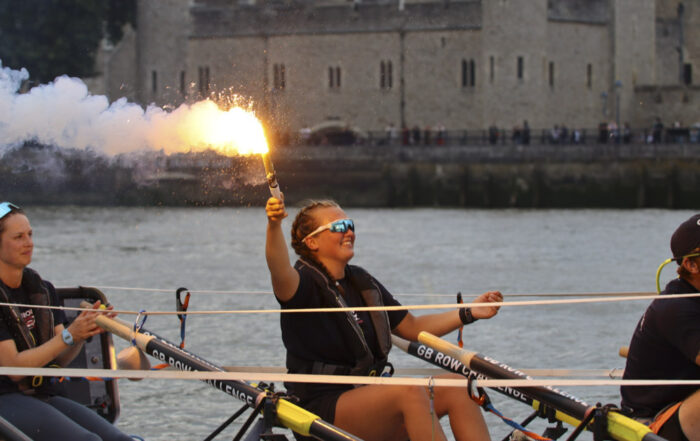
Youngest woman ever to row around Great Britain as team Nautilus sets new world record
The crew completed the unsupported 2,000-mile GB Row Challenge in record time while contributing to marine research 22-year-old Grace Church has become the youngest woman ever to row around the British mainland, after crossing the [...]
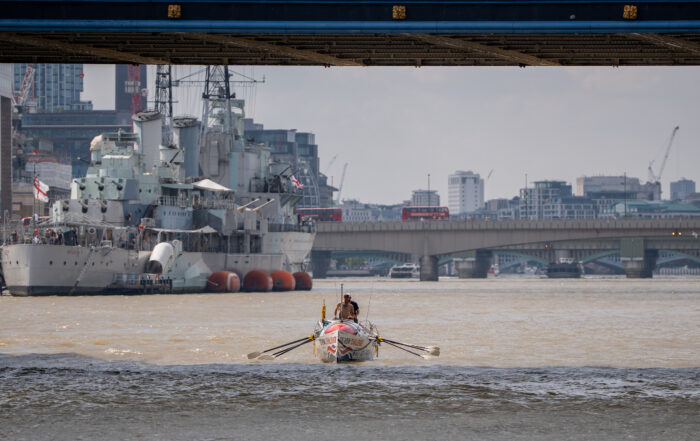
Five-man crew complete 2,000 mile row around Great Britain setting a new world record
Team Rowmads has successfully completed an extraordinary unsupported circumnavigation of Great Britain by rowing boat, covering approximately 2,000 miles in one of the world's most demanding endurance challenges. The team is the first and fastest [...]