Laura Fantuzzi, a PhD student at the University of Portsmouth, is responsible for analysing the ocean pollution data collected by rowers doing the GB Row Challenge, a rowing race around Great Britain. This year The Crown Estate is sponsoring the GB Row Challenge as the lead environmental data partner.
As a PhD researcher studying the marine environment, I spend a lot of time thinking about problems in the sea – we have biodiversity loss, biomass loss, increasing temperature, fisheries collapsing. Scientists want to act on these problems, but without data, we don’t know where the problems are or how bad they are.
The ocean is vast, complex and constantly changing. To understand it properly, we need detailed information about everything from seabed habitats and marine species to water conditions and human activities at sea. Collecting that information is often expensive and time-consuming, involving specialist surveys, equipment and teams working offshore.
Because of this, every dataset we collect is incredibly valuable and that’s why making marine data open and accessible is so important.
Where does the GB Row Challenge come in?
Rowers taking part in the GB Row Challenge race around the whole of Great Britain’s coastline in boats that have been fitted with specialist equipment to collect ocean data. They collect samples of microplastics and environmental DNA (eDNA) as well as monitoring temperature, salinity and noise pollution.
What’s really exciting is that this is the first time eDNA has been used to study marine biodiversity at this kind of scale in UK waters. It means we’re contributing to a much bigger picture of biodiversity monitoring.
This matters because if we want to protect marine species, we first need to know where they are. Once we have that data, we can make informed decisions about marine protected areas and how best to manage them.
To tackle microplastics, the UK has already introduced measures such as banning microplastics in personal care products and reducing single-use plastics. However, to understand whether these policies are actually effective, we need to monitor pollution levels in the environment over time.
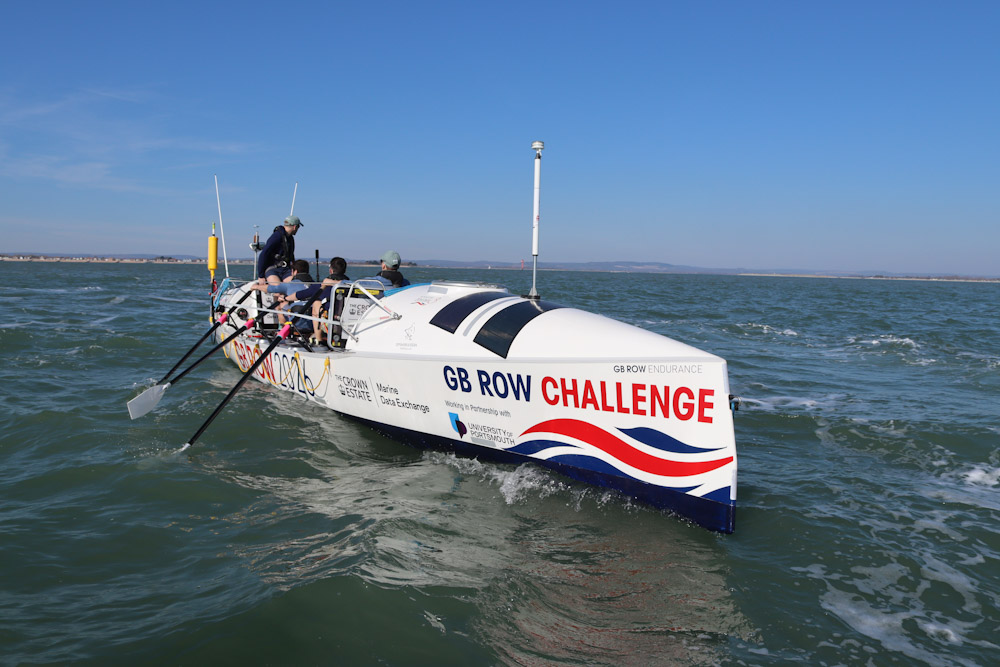
One of the teams taking part in this year’s GB Row Challenge
This is where data becomes essential. Ongoing monitoring allows us to track changes and assess progress. But because it isn’t possible to monitor everywhere, we also need to prioritise where we focus our efforts.
One approach is to identify areas that can act as proxies for the wider UK. These are locations where microplastics tend to accumulate. If we observe a decline in concentrations in these key areas, we can reasonably infer that pollution levels may be decreasing more broadly.
To do this effectively, we first need to establish robust, large-scale baselines. These baselines help us understand current conditions and identify priority locations for monitoring, ensuring that our efforts are both targeted and meaningful.
The same idea applies to underwater noise. To understand its impact, we first need to know where it’s happening, how often, and at what levels. That kind of insight only comes from consistent, reliable data.
When we bring different types of data together, such as pollution and biodiversity, we can build a much clearer picture. We can map where species are found alongside where pollution is occurring, including noise, and begin to understand what those species are being exposed to.
That’s when the data becomes really powerful. It moves beyond simple monitoring and starts to show us how human activity is affecting marine life, helping us make better, more informed decisions about how to protect it.
Where is this data being hosted and why does open access matter?
It is fantastic that The Crown Estate has joined the GB Row Challenge as the lead environmental data partner. All of the data collected during the challenge will be hosted on The Crown Estate’s Marine Data Exchange (MDE), one of the world’s largest collections of marine industry data, accessible to everyone around the globe.
The MDE hosts survey data collected throughout the lifetime of offshore projects in the UK, along with new data and research generated through offshore-related evidence programmes. Expanding on this, data from previous GB Row Challenges will also be available there. Crucially, the MDE is open source, meaning anyone can access the data, use it and build on it – from scientists and policymakers to industry and the public.
As a researcher, I rely on open data all the time. I regularly use resources like the World Register of Marine Species, which provides a global catalogue of marine species and their taxonomy, and the Ocean Biodiversity Information System and its UK node, DASSH, which bring together species records from around the world. These databases allow me to compare new findings with data collected over decades. The MDE is invaluable in the same way.
For example, I can analyse species identified through eDNA samples and compare them with historical records. Are we finding species in UK waters that were not recorded before? Could this be linked to climate change and ocean warming? Are sensitive species appearing more or less frequently than they used to? These are the kinds of questions open data helps us answer.
What makes these resources so valuable is that they allow researchers to build on existing knowledge. The principle of collect once, use many times is simple but powerful. It ensures that data continues to deliver value long after it has been collected.
There is still more we could do. Take microplastics as an example. While there are well-established databases for species records, there is not yet a comprehensive, standardised database for microplastics. You could imagine a system that records where and when samples were collected, what type of plastic was found, whether fibres, fragments, films or industrial pellets, and even includes images. Over time, this kind of dataset could help us understand which plastics are most harmful, where they come from and how they spread.
For researchers like me, platforms like the MDE are incredibly valuable. They allow us to explore existing data, combine information from different sources and build a stronger understanding of marine environments.
Open access to marine data lowers barriers to research and encourages collaboration between scientists, organisations and countries. It allows us to build on work that’s already been done and use it in new and innovative ways.
In many ways, open data helps accelerate scientific discovery. Because ultimately, the more we understand about the ocean, the better equipped we are to protect it.
Share This Story, Choose Your Platform!
Recent Posts
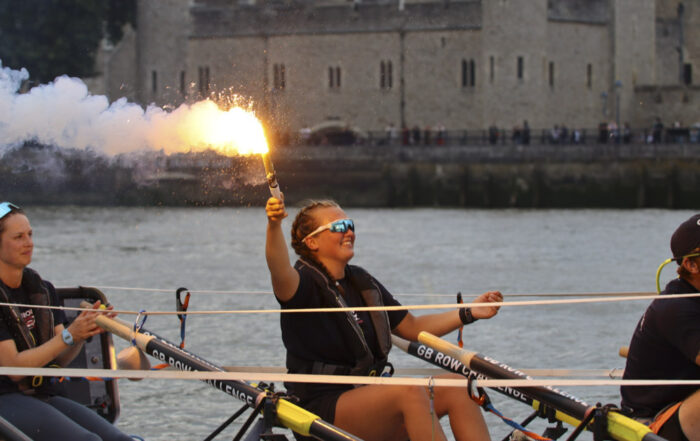
Youngest woman ever to row around Great Britain as team Nautilus sets new world record
The crew completed the unsupported 2,000-mile GB Row Challenge in record time while contributing to marine research 22-year-old Grace Church has become the youngest woman ever to row around the British mainland, after crossing the [...]
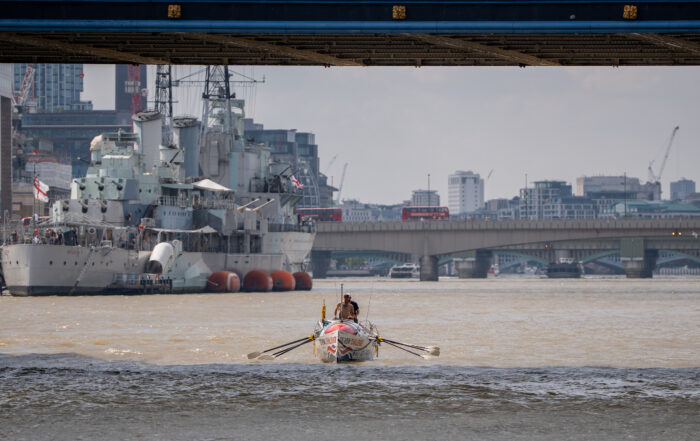
Five-man crew complete 2,000 mile row around Great Britain setting a new world record
Team Rowmads has successfully completed an extraordinary unsupported circumnavigation of Great Britain by rowing boat, covering approximately 2,000 miles in one of the world's most demanding endurance challenges. The team is the first and fastest [...]