The ocean has always been a place of mystery, where the vast majority of life remains hidden beneath the breaking waves. Traditionally, understanding what lives in our coastal waters required expensive research vessels, massive nets, and hours of physical observation. But a quiet revolution is taking place on the hulls of the rowing boats competing in the GB Row Challenge. By using Environmental DNA (eDNA), these teams are uncovering the “genetic fingerprints” of British marine life without ever needing to see a single fish.
This 2,000-mile journey around Great Britain is not just a race of endurance; it is one of the most comprehensive biodiversity surveys ever attempted. In this post, we explore the science of eDNA, how it is captured from a rowing boat, and why this “invisible” data is the key to protecting the future of the UK’s seas.
What exactly is eDNA?
Every living creature leaves a trace of itself behind. As fish, mammals, and even tiny invertebrates move through the water, they constantly shed biological material. This includes skin cells, scales, mucous, metabolic waste, and reproductive cells.
Each of these fragments contains the unique genetic code—the DNA—of the animal it came from. In the terrestrial world, forensic scientists use this to solve crimes. In the marine world, we use it to map an entire ecosystem. Because water is a powerful solvent, it holds this genetic material in a “biological soup” for a period of time (usually 7 to 21 days) before it breaks down.
By taking a simple sample of seawater, we can sequence these DNA fragments and match them against a massive global database of known species. It is the ultimate census: a way to detect everything from a tiny seahorse hiding in seagrass to a massive Minke whale passing miles away.
Why Rowers are the Perfect Scientists
You might wonder why we use rowing boats instead of high-tech motorboats. The answer lies in the “slow science” approach.
Standard research vessels are large, loud, and intrusive. Their engines create massive amounts of underwater noise, which can scare away sensitive species like dolphins and porpoises. Furthermore, their deep drafts prevent them from entering the shallow, rocky “intertidal zones” where much of Britain’s biodiversity thrives.
A GB Row boat, however, is:
- Silent: It moves through the water with minimal disturbance, capturing a natural “snapshot” of the environment.
- Slow: Moving at 2–3 knots allows for a continuous, high-quality intake of water, ensuring the filters don’t become instantly clogged with silt.
- Comprehensive: The race route covers every corner of the UK coastline, including remote areas of Western Scotland and the rugged Cornish coast that are rarely surveyed.
The On-Board Lab: Capturing the Samples
Capturing eDNA from a small rowing boat in the middle of a storm is a feat of engineering and discipline. The teams use a specialised filtration system developed by the University of Portsmouth and NatureMetrics.
The Sterile Challenge
The biggest enemy of eDNA science is contamination. If a rower touches the water after eating a tuna sandwich, the DNA from that tuna could show up in the results, even if that species isn’t anywhere near the UK coast. To prevent this, the system is entirely enclosed.
- The Intake: Seawater is pulled into the boat through a dedicated hull fitting located well away from the crew’s living quarters.
- The Filter: The water is pumped through a small, disc-shaped capsule containing a membrane with microscopic pores (usually 0.2 microns). This is small enough to catch individual cells and even free-floating DNA strands.
- The Preservation: Once several litres of water have passed through, the crew disconnects the capsule and injects a “buffer” solution. This liquid “freezes” the DNA in time, preventing bacteria from eating it or sunlight from degrading it.
Discoveries from the 2,000-Mile Perimeter
What have we actually found? The results from previous GB Row missions have been staggering. The data provides a high-definition map of the UK’s changing marine demographics.
Tracking Commercial Fish Stocks
The eDNA data helps monitor the health of vital species like Atlantic Cod, Herring, and Mackerel. By seeing where these species are “shedding” the most DNA, scientists can identify critical spawning grounds that may need extra protection from industrial fishing.
Detecting Rare and Invasive Species
eDNA is incredibly sensitive. It has picked up the presence of the elusive European Eel, a critically endangered species that is notoriously hard to track. On the flip side, it also acts as an early warning system for invasive species that may have hitched a ride on the ballast water of international ships, allowing conservationists to act before an infestation takes hold.
Mammal Hotspots
From the Bottlenose dolphins of the Moray Firth to the Grey seals of the Farne Islands, eDNA allows us to track the migration patterns of Britain’s largest marine residents. It provides a non-invasive way to see how these populations are shifting in response to rising sea temperatures.
From the Boat to the Policy Table
The most important part of the GB Row scientific mission is what happens after the race. The samples are taken to the University of Portsmouth, where the DNA is extracted and sequenced.
This data is then uploaded to The Marine Data Exchange. This is a public resource used by The Crown Estate, government bodies, and environmental charities. It helps answer critical questions:
Where should we place offshore wind farms to minimise the impact on local wildlife?
Are our Marine Conservation Zones (MCZs) actually working?
How is climate change affecting the distribution of native British species?
When a team crosses the finish line at Tower Bridge, they aren’t just celebrating a physical achievement. They are delivering a treasure trove of biological information that will influence how we protect our oceans for decades to come.
Frequently Asked Questions
Does the DNA tell you how many fish there are?
Not exactly. eDNA tells us about presence. While a higher concentration of DNA often suggests more animals, factors like water temperature and currents can affect how long the DNA lasts. However, it is an excellent tool for showing us “who” is in the area.
Can you detect humans with eDNA?
Yes! Human DNA is almost always present in coastal samples. Scientists use special “filters” during the sequencing process to ignore human DNA and focus solely on the marine species they are looking for.
How long does the DNA last in the water?
In the cold, salty waters of the UK, eDNA typically remains detectable for about 7 to 14 days. This is perfect for the GB Row Challenge, as it means the DNA captured is a “fresh” record of what was in that specific area within the last week.
Is the equipment heavy?
No. The beauty of the eDNA setup is that it is incredibly lightweight. The pump and filters weigh only a few kilograms, making them ideal for a rowing boat where every gram of weight affects the speed of the boat.
The GB Row Challenge proves that adventure and science are natural partners. As the 2026 teams prepare for their 2,000-mile journey, they are stepping into their roles as the guardians of the coast—using the power of the “genetic fingerprint” to ensure that the secrets of the sea are finally heard.
Share This Story, Choose Your Platform!
Recent Posts
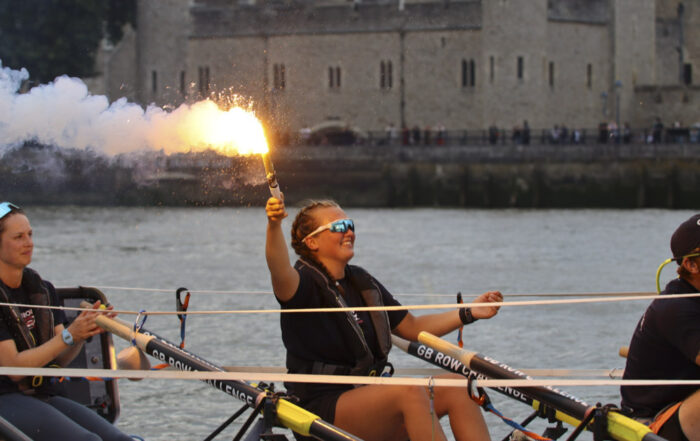
Youngest woman ever to row around Great Britain as team Nautilus sets new world record
The crew completed the unsupported 2,000-mile GB Row Challenge in record time while contributing to marine research 22-year-old Grace Church has become the youngest woman ever to row around the British mainland, after crossing the [...]
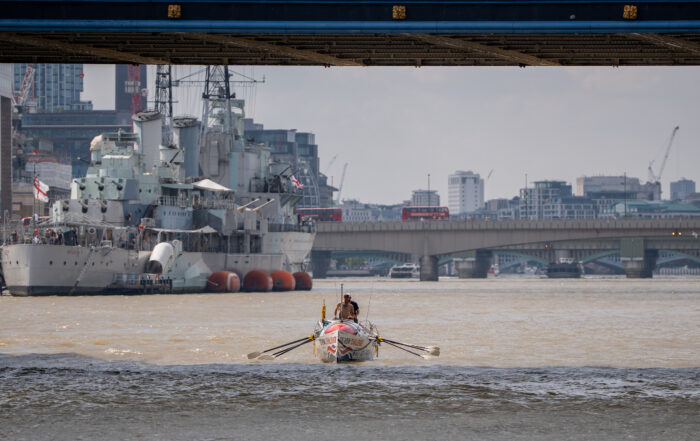
Five-man crew complete 2,000 mile row around Great Britain setting a new world record
Team Rowmads has successfully completed an extraordinary unsupported circumnavigation of Great Britain by rowing boat, covering approximately 2,000 miles in one of the world's most demanding endurance challenges. The team is the first and fastest [...]