When endurance athletes discuss the ultimate test of human grit, the conversation often turns to the vast expanses of the Atlantic or Pacific oceans. However, there is a 2,000-mile journey that remains more technically demanding, physically draining, and strategically complex than any trans-oceanic crossing. The GB Row Challenge, a continuous, unassisted circumnavigation of Great Britain, is widely acknowledged as the World’s Toughest Rowing Race.
The difficulty does not solely lie in the distance. Instead, the “toughest” label is earned through a brutal combination of the UK’s volatile maritime environment and a rigorous scientific mandate. This race turns every vessel into a high-stakes floating laboratory, where teams must battle for survival while simultaneously acting as citizen scientists for the University of Portsmouth.
1. The Unassisted Ethos: A Raw Battle for Survival
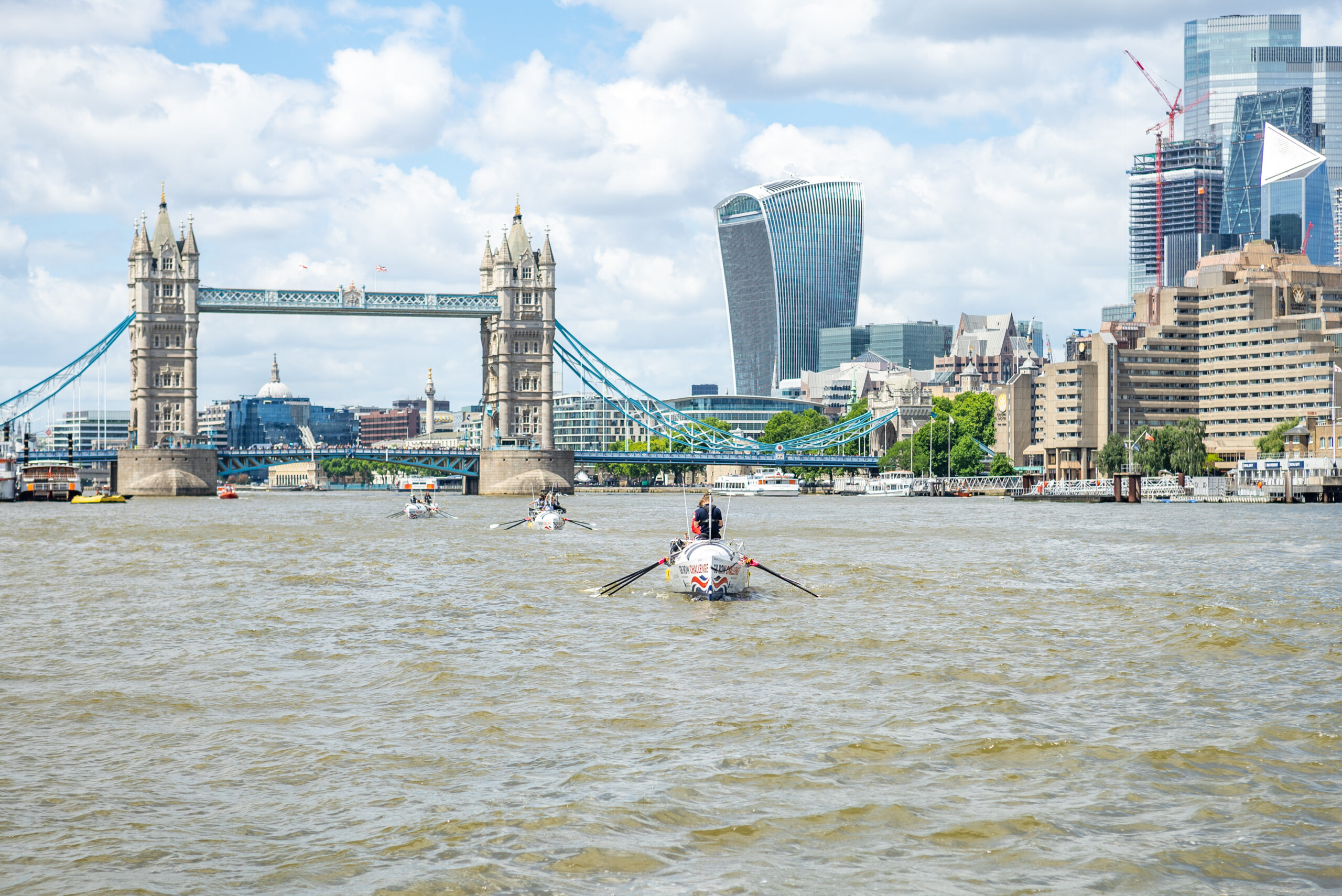
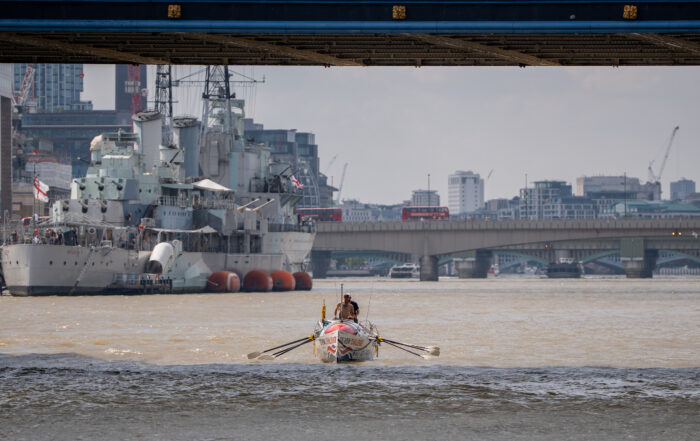
At the heart of the GB Row Challenge is a strict, uncompromising ethos of unassisted rowing. While some ocean races allow for support boats or mid-race resupplies, GB Row is a journey into total isolation. From the moment the starting horn sounds at Tower Bridge in London, the crew is entirely on their own.
The Zero-Contact Rule
To maintain the integrity of a Guinness World Record attempt, teams cannot receive any outside assistance. This means:
No Resupplies: Every calorie of food and every spare part for the boat must be carried from the start.
No Mechanical Aid: If the on-board desalinator (the machine that turns seawater into drinking water) fails, the crew must rely on a manual hand-pump, adding hours of physical labour to their already exhausted schedule.
No Physical Contact: Touching a pier, receiving a bottle of water from a passing yacht, or being towed—even for a few metres—results in immediate disqualification from the record books.
This isolation is a massive psychological burden and adds to the moniker of the World’s Toughest Rowing Race. Knowing that there is no “safety net” just over the horizon forces a level of self-reliance and emergency preparedness that few other sports require.
2. Navigational Combat: Tides, Shipping, and Whirlpools
The primary reason GB Row is considered harder than the Atlantic is the complexity of the water itself. In the middle of the ocean, the water is generally deep and the currents are predictable. Around the UK, the water is a fast-moving, multi-dimensional obstacle course.
The Tidal Trap
The UK has some of the world’s most powerful tidal ranges. Teams do not just row against the wind; they row against the tidal stream. In areas like the Pentland Firth or the Mull of Galloway, tides can reach speeds of over 10 knots. Since a rowing boat typically moves at 2 to 3 knots, a team arriving at a headland at the wrong time will find themselves rowing with maximum effort only to see the land moving away from them as they are swept backward.
The Industrial Ocean
Navigating the English Channel and the North Sea introduces the stress of the world’s busiest shipping lanes. Crews must cross lanes filled with 300-metre container ships and tankers that cannot stop or turn for a small rowing boat. Managing AIS (Automatic Identification System) data and VHF radio communication while suffering from extreme sleep deprivation adds a layer of cognitive load that trans-oceanic rowers simply do not experience.
3. The Scientific Mission: Data with Every Stroke
What elevates GB Row beyond a mere race is its partnership with the University of Portsmouth. In most endurance events, your only job is to finish. In the World’s Toughest Rowing Race, your job is to work. Each boat is fitted with specialist equipment to collect environmental data that is impossible for traditional research vessels to gather.
Microplastic Monitoring
In 2024, data collected by teams revealed microplastic concentrations 100 times higher than previously estimated. This was possible because rowers use ultra-fine steel filters (pore size 0.04 mm) and sample the water continuously for up to 3.5 hours per day. This physical task—pumping water while battling swells—is a significant drain on the crew’s energy reserves.
Biodiversity via eDNA
Teams also collect environmental DNA (eDNA). By filtering just a few litres of water, scientists have identified over 82 vertebrate species, including endangered European eels and migratory salmon. This “genetic fingerprinting” provides a snapshot of the health of our coastal ecosystems that is far more detailed than traditional netting methods.
4. Acoustic Landscapes and Climate Indicators
The “floating lab” also listens to the deep. Every boat carries a hydrophone—an underwater microphone—embedded in the rudder to record the soundscape of the British coast.
Mapping Noise Pollution
Because a rowing boat is silent, it provides the perfect platform for recording underwater noise pollution. In previous years, these recordings have captured everything from the echolocation clicks of Harbour Porpoises to the disruptive noise of industrial shipping.
Detecting Warming Seas
The acoustic data has even identified climate trends. Scientists were surprised to hear snapping shrimp as far north as the East of Scotland. These creatures are typically found in much warmer southern waters. Their migration north is a stark, audible indicator of rising sea temperatures and the changing health of our marine environment.
5. The Toll: Physical and Mental Deprivation
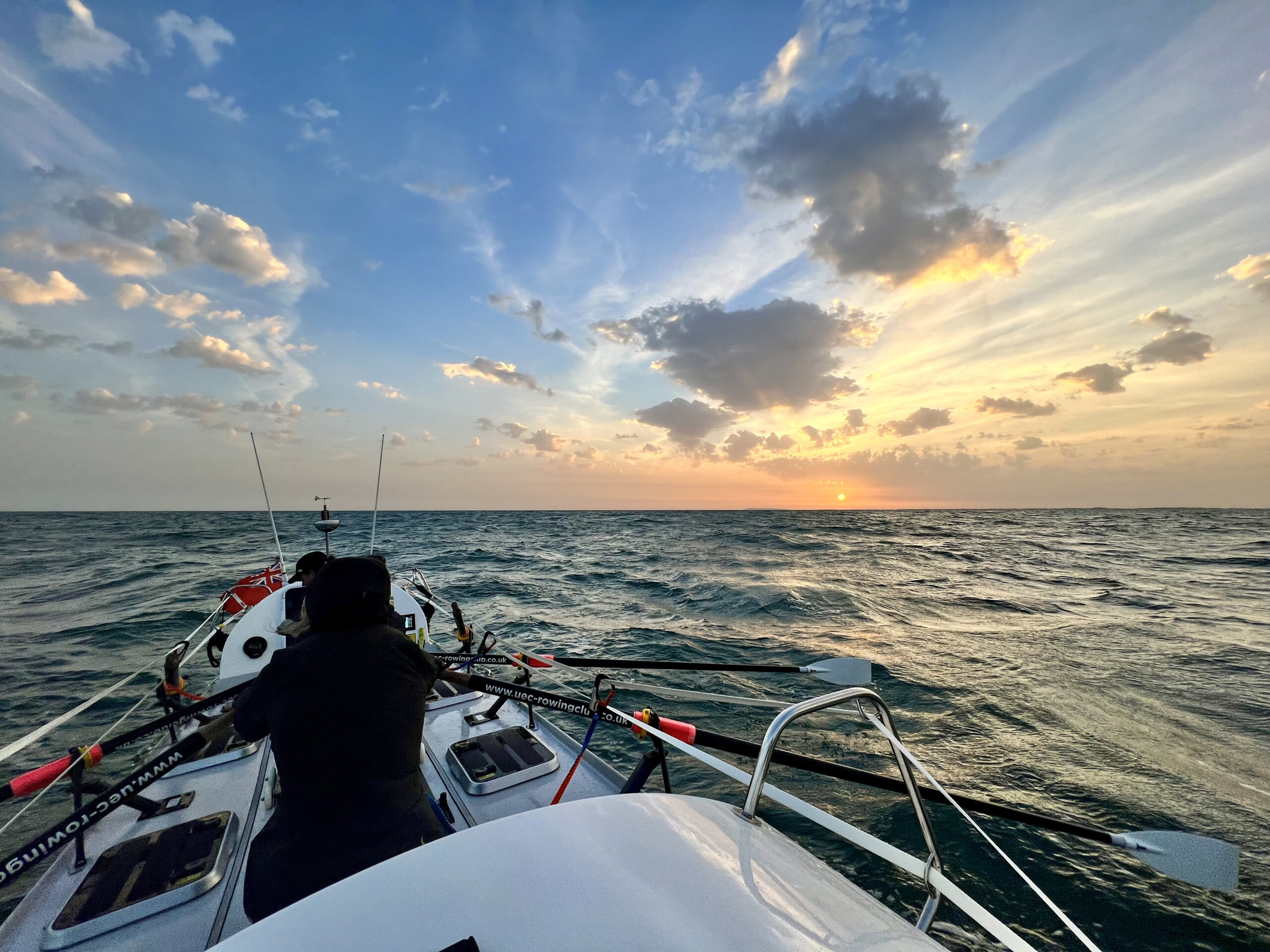
The physical cost of competing in the World’s Toughest Rowing Race is staggering. A typical crew operates on a “2 hours on, 2 hours off” rotation, 24 hours a day. This leads to a state of chronic sleep deprivation that impairs decision-making and emotional regulation.
Caloric Deficit: Rowers burn between 5,000 and 8,000 calories per day. Despite eating a diet of high-calorie freeze-dried meals, most participants finish the race having lost significant body mass.
“Boat Bites”: Constant exposure to salt water and the friction of the rowing seat causes sores and skin infections that are difficult to heal in a damp, marine environment.
Mental Resilience: The “Mull of Kintyre” or the “Corryvreckan Whirlpool” are not just physical barriers; they are psychological ones. Watching the GPS show zero progress for hours while you row with everything you have is the ultimate test of the human spirit.
6. The Ultimate Reward and World’s Toughest Rowing Race FAQ
When a team finally passes under Tower Bridge after 2,000 miles, they have achieved something truly historic. They have survived a journey that has broken many and delivered a treasure trove of data that will help protect the UK’s oceans for decades. The GB Row Challenge proves that the hardest paths often lead to the most important discoveries.
How long does the GB Row Challenge take?
The fastest world record for the 2,000-mile circumnavigation is 26 days. However, most teams take between 40 and 50 days depending on weather conditions and tidal windows. The 2024 mixed team record was set at 49 days.
Where does the World’s Toughest Rowing Race start and finish?
The race officially starts and finishes at Tower Bridge, London. Starting in the heart of the capital adds a unique navigational challenge as teams must time their departure with the tides of the River Thames.
Is GB Row harder than the Talisker Whisky Atlantic Challenge?
Many veterans of both races believe so. While the Atlantic is longer (3,000 miles), the Atlantic is largely “downwind” and in deep water. GB Row requires constant navigation around complex tides, shipping lanes, and shallow coastal hazards and all of these things combine to make it the World’s Toughest Rowing Race.
How can I see the data collected during the race?
The scientific data on microplastics, eDNA, and noise pollution is hosted on The Crown Estate’s Marine Data Exchange. This is one of the world’s largest collections of marine industry data and is accessible to scientists and the public worldwide.
What species have been found using eDNA during the race?
From just 77 litres of water, 82 marine vertebrate species have been identified. These include Bottlenose dolphins, Harbour porpoises, Minke whales, and Grey seals, as well as commercial fish stocks like Cod and Mackerel.
Who organises the GB Row Challenge?
The race is managed by GB Row Challenge Ltd in exclusive scientific partnership with the University of Portsmouth. The next race is scheduled to begin on Sunday, 14 June 2026.
Share This Story, Choose Your Platform!
Recent Posts
Youngest woman ever to row around Great Britain as team Nautilus sets new world record
The crew completed the unsupported 2,000-mile GB Row Challenge in record time while contributing to marine research 22-year-old Grace Church has become the youngest woman ever to row around the British mainland, after crossing the [...]
Five-man crew complete 2,000 mile row around Great Britain setting a new world record
Team Rowmads has successfully completed an extraordinary unsupported circumnavigation of Great Britain by rowing boat, covering approximately 2,000 miles in one of the world's most demanding endurance challenges. The team is the first and fastest [...]