Fay Couceiro is Professor of Environmental Pollution at the University of Portsmouth and lead scientist for the GB Row Challenge, a rowing race around Great Britain where participating boats are fitted with scientific equipment that collects environmental data, contributing to national research on ocean health. This year The Crown Estate is sponsoring the GB Row Challenge as lead environmental data partner.
As if rowing around Great Britain was not already enough of a challenge, we decided to make it even harder by adding science into the mix!
But that scientific element is exactly what makes the expedition so valuable. It provides a unique opportunity to repeatedly measure the health of our seas across vast stretches of coastline that are otherwise difficult and expensive to monitor. Collecting this kind of baseline data is absolutely critical if we are serious about understanding how our marine environment is changing.
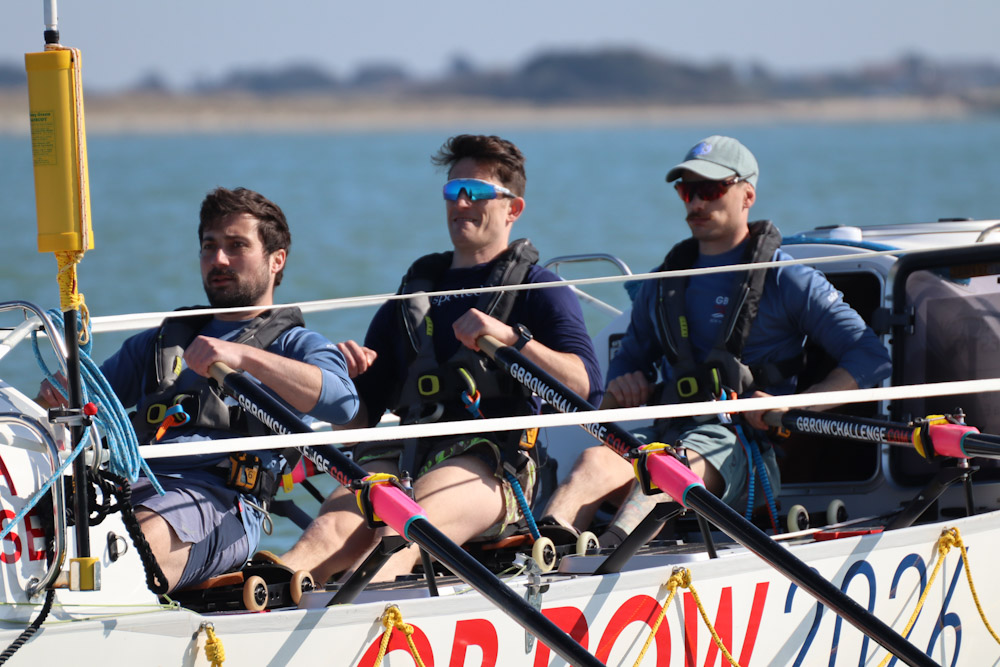
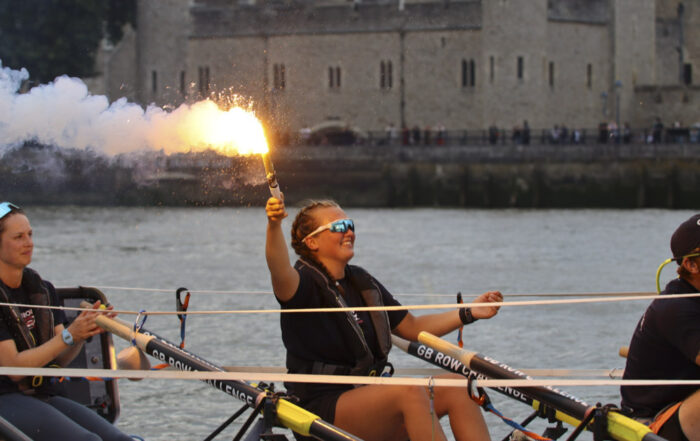
Team Rowmads during training for this year’s GB Row Challenge
For three years now, we have been collecting data from some of the most challenging and under-sampled waters around the UK. What makes this work remarkable is not only the science itself, but the way it is being gathered – rowers collect data on microplastic pollution, biodiversity, underwater noise pollution, sea temperature and salinity.
GB Row Challenge teams are helping us build one of the most detailed circumnavigation environmental baselines ever assembled for British coastal seas.
Baseline data gives us a starting point. Without it, we cannot confidently answer some of the most important environmental questions of our time. Are our seas warming? Is biodiversity declining? Are restoration projects actually working? Is pollution increasing?
One isolated dataset can only ever provide a snapshot. The real scientific value emerges when you build year upon year of observations. By returning to the same waters repeatedly, using increasingly refined methods, we begin to separate natural variability from genuine long-term trends.
Over the last three years, our data collection systems have evolved significantly. Multi-year surveys teach you valuable lessons about consistency, reliability and sampling strategy. We have fine-tuned protocols, improved equipment and strengthened the way data is processed and interpreted. Each year improves the next.
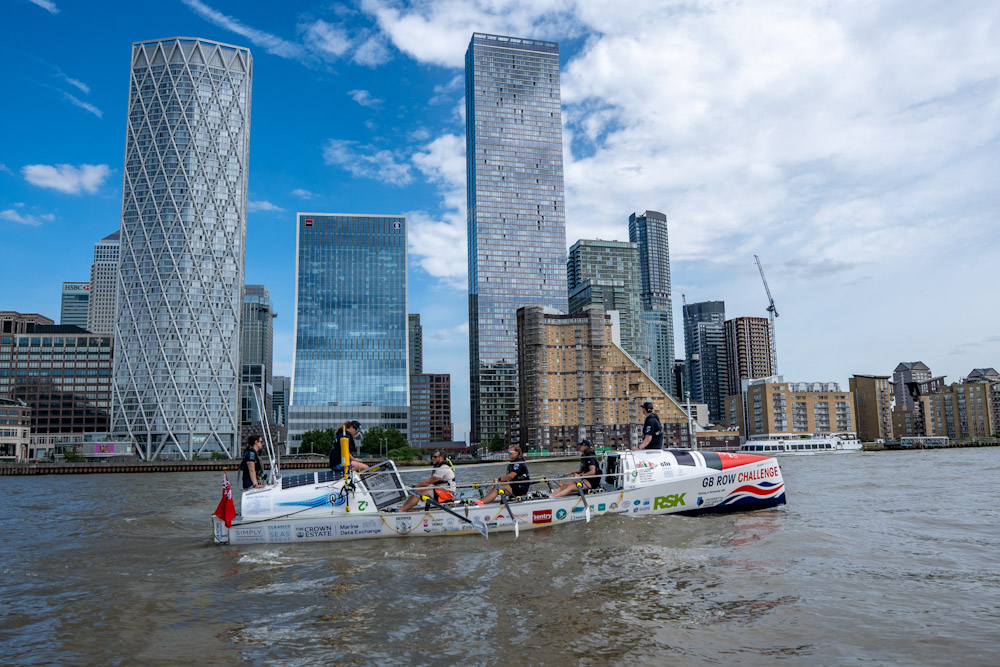
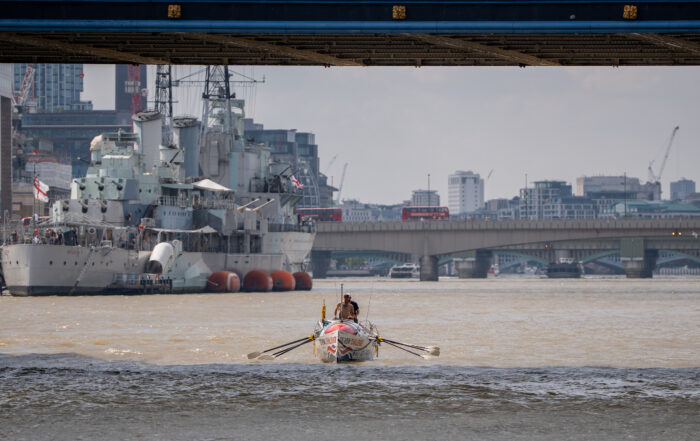
Team Rowmads rowing along The Thames
The scale of the data now being assembled is extraordinary. It would cost hundreds of thousands of pounds to gather this information using conventional research vessels and large scientific teams. Instead, GB Row Challenge provides a low carbon, highly efficient platform for collecting critical environmental data around the UK coastline.
And this growing dataset has now found the perfect home in The Crown Estate’s Marine Data Exchange, the world’s largest collection of marine industry survey data. The platform contains more than 200 terabytes of survey data gathered throughout the lifecycle of UK offshore projects, alongside research designed to address key evidence gaps in our understanding of the marine environment.
We are incredibly excited to have The Crown Estate on board as our environmental data partner, helping ensure this information is accessible and can contribute to future marine research and decision-making.
Ultimately, this project is about understanding the condition of our seas as completely as possible. By combining these datasets over time, we are building a clearer picture of what is happening beneath the surface around the UK.
Only through sustained, long-term monitoring can we truly answer the question that matters most: Are our seas getting better, or worse?
Share This Story, Choose Your Platform!
Recent Posts
Youngest woman ever to row around Great Britain as team Nautilus sets new world record
The crew completed the unsupported 2,000-mile GB Row Challenge in record time while contributing to marine research 22-year-old Grace Church has become the youngest woman ever to row around the British mainland, after crossing the [...]
Five-man crew complete 2,000 mile row around Great Britain setting a new world record
Team Rowmads has successfully completed an extraordinary unsupported circumnavigation of Great Britain by rowing boat, covering approximately 2,000 miles in one of the world's most demanding endurance challenges. The team is the first and fastest [...]